AI-powered management visibility
You're not missing updates. You're missing early visibility.
Cenra turns short weekly team check-ins into management insight.
See where work is moving forward, where teams need support, and where risks are emerging.
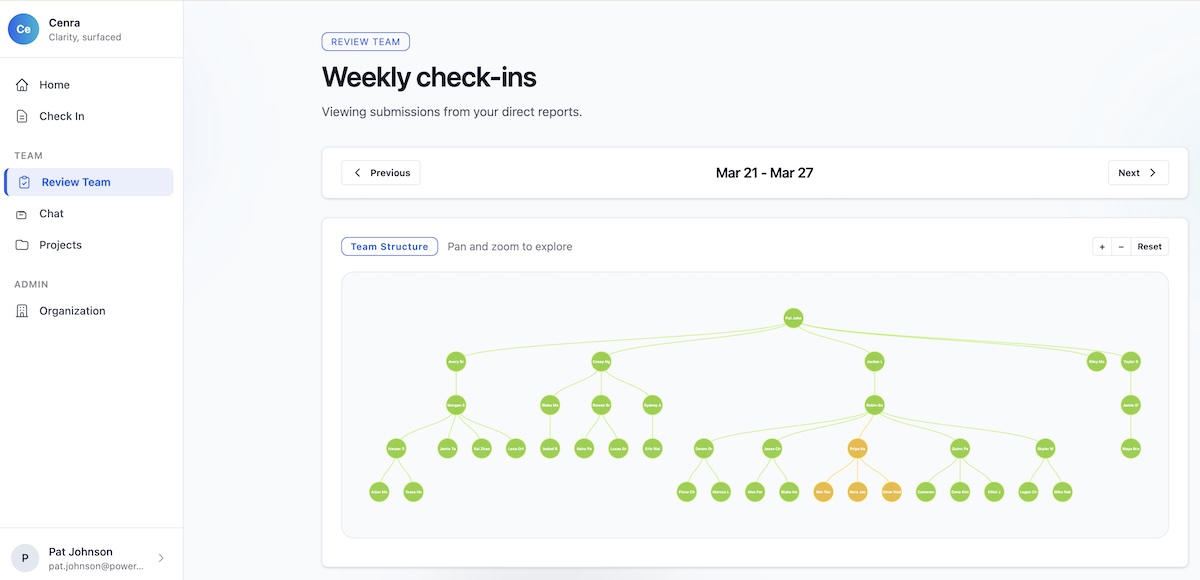
-
Input
One weekly check-in per person
Short check-ins replace vague status updates with clearer team visibility.
-
Setup
Up and running within a day
Roll it out quickly without redesigning your operating rhythm or adding another reporting workflow.
-
Visibility
Clear leadership visibility
Managers and leaders get earlier insight without adding another layer of process for teams.
AI turns weekly updates into a clearer picture of team and project health.
The weekly rhythm is simple:
Team members answer one short check-in → Cenra analyses the responses → managers and leaders get a clearer weekly picture of team and project health.
-
01
People submit one check-in
-
02
AI extracts the useful signals
-
03
Managers see useful patterns earlier
Why visibility still gets patchy
The people closest to the work already know what’s changing. That visibility just doesn’t travel well.
Teams usually know what is moving, what is getting harder, and where help would make a difference. Cenra helps that visibility reach managers and leaders while it is still useful.
The people doing the work already know
Important signals show up close to the work first. They often stay buried in local conversations, standups, and weekly updates.
Managers are already piecing it together
Managers can sense the pattern, but turning scattered updates into one clear picture is still manual and time-consuming.
Leadership still sees an incomplete picture
By the time information reaches leadership, support needs can be harder to act on and useful progress can be missed.
The real gap
You already have the updates.
What’s missing is a consistent way to turn them into management insight.
Cenra gives the updates you already collect a clearer route upward, so managers can understand what changed this week, what needs attention, and where teams are making progress.
One clearer weekly view for managers and leadership, built from lightweight team input.
You don't need more updates. You need earlier visibility from the ones you already have.
How weekly input becomes visibility
One short check-in → clear visibility across the team
The input stays lightweight. Visibility gets clearer at every level, from individual check-ins to manager summaries and upward reporting.
What this looks like in practice
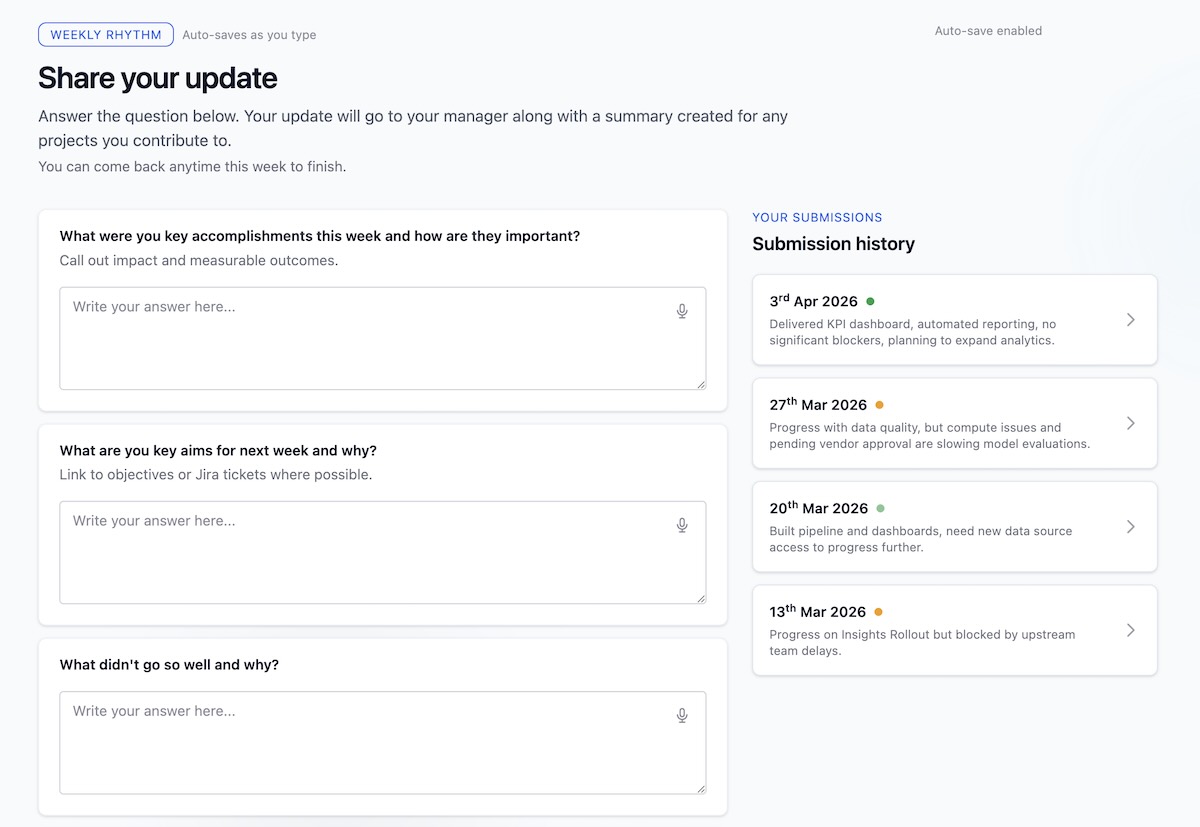
Takes a few minutes once a week
The check-in is short, structured, and easy to finish in minutes.
with built in dictation and auto save
Manager visibility
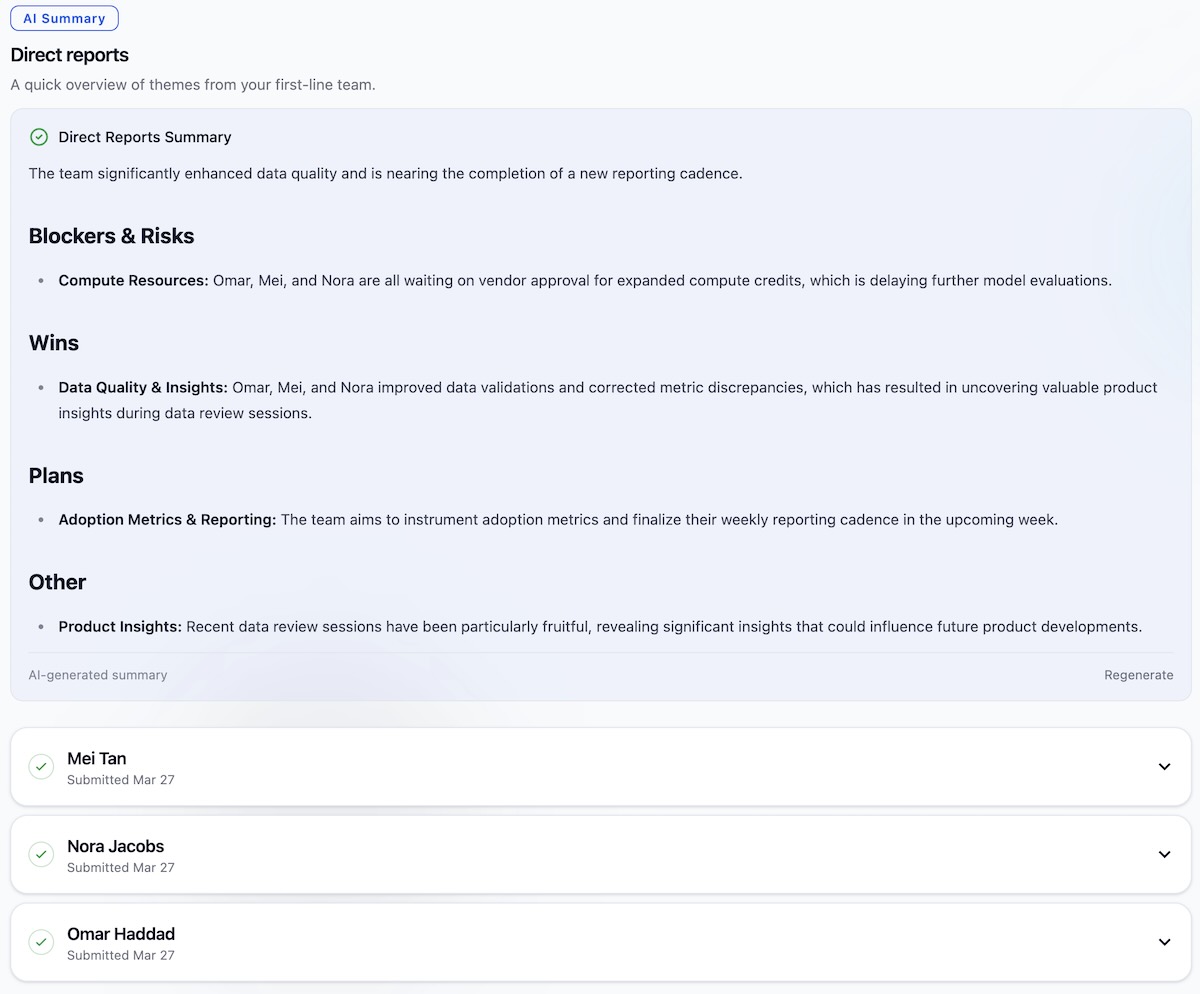
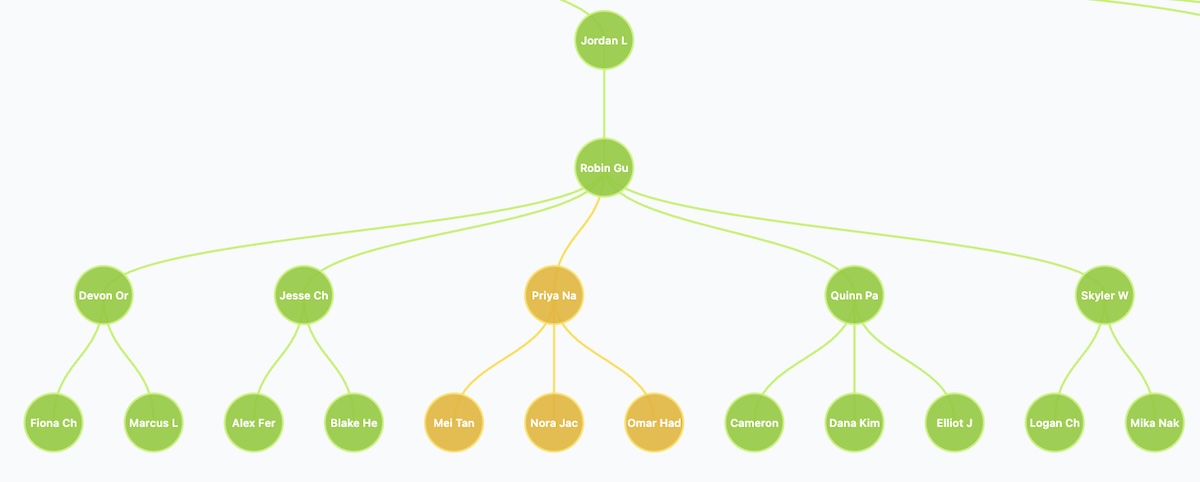
Cenra turns weekly updates into a clearer picture of project movement, team pressure, and where support is needed.
AI analyses & summarises
Leadership summary
Managers can report upwards with a clearer picture of what changed, where momentum is building, and where risks are emerging.
leadership-ready summaries
Not just risks
Make progress easier to see.
Good work often disappears into Slack threads, standups, and memory. Cenra helps managers capture progress and achievements alongside the challenges, so teams are not only noticed when something goes wrong.
Recognition
Recognise useful work
Capture contributions and achievements while they are still fresh.
Momentum
Track momentum
See where projects are moving well, not only where support is needed.
Reviews
Improve reviews and 1:1s
Build a useful record of progress, blockers, decisions, and support over time.
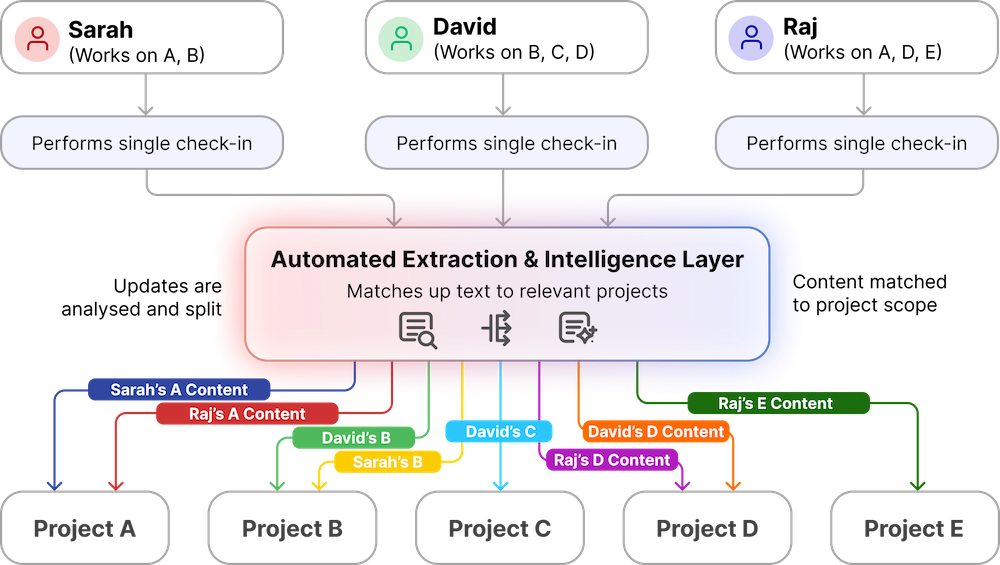
One update. Every project stays up to date.
No duplicate reporting. No chasing for updates.
You already see this today:
- The same update gets repeated
- Managers chase for updates
- Things fall out of sync
Cenra connects each update to the right projects — automatically.
One input. Multiple projects. No duplication.
Leadership view
Leadership reporting without another reporting process.
Cenra helps managers turn weekly team updates into leadership-ready summaries, making it easier to report upwards with clarity around progress, pressure, support needs, and emerging risks.
- Summarise what changed this week
- Show where support is needed
- Highlight where momentum is building
- Give leadership a clearer picture without asking teams for more reporting
Try it with your team
We’ll set Cenra up with your team and run it for a few weeks. You’ll see exactly what signals emerge — and whether it’s useful.
If it's useful, we keep going. If not, you stop.
Talk to us about a pilotRunning with a small number of teams right now
One input. Three levels of visibility.
Everyone sees what they need — without more reporting work
The same weekly input gives each level the right view without asking teams for more reporting.
Leadership
Leadership gets earlier visibility into project pressure, momentum, and where support is needed.
- Clearer weekly reporting
- Visible project momentum
- Earlier support signals
Managers
Because Cenra captures structured weekly updates over time, managers can bring better examples into review conversations: progress made, blockers handled, support needed, and contributions that might otherwise be forgotten.
- Less chasing
- Less manual summary work
- Better examples for 1:1s and annual reviews
Teams
Teams give one short update without taking on another reporting layer.
- Quick weekly input
- No extra reporting
- Important detail carried week to week
The vision
An organisational intelligence layer that grows with your teams.
Each weekly check-in is small on its own. Together, they create a living history of project movement, team pressure, decisions, blockers, achievements, and support needs. As that context builds, Cenra becomes more than a weekly update tool: it becomes an organisational intelligence layer managers and leaders can use to understand patterns over time.
See patterns earlier
- Repeated blockers become easier to spot.
- Rising pressure shows up before it becomes an escalation.
- Recurring themes are easier to discuss with supporting detail.
Preserve organisational memory
- Useful detail survives beyond meetings and Slack threads.
- Managers can revisit the examples behind a summary.
- Important team knowledge is not held only in individual memory.
Understand change over time
- Managers can look back across weeks and months.
- Project movement and priorities become easier to compare.
- Review conversations have better examples to draw from.
Cenra compounds the value of thoughtful weekly check-ins into management insight.
Frequently asked questions
Common questions before getting started.
Cenra is not a project management tool, survey platform, or meeting transcript analyser. It is a lightweight weekly check-in layer that turns team updates into management insight.
What exactly does Cenra do?
+
Cenra collects one short structured weekly update from each team member, then uses AI to surface useful patterns, project updates, support needs, and manager-ready summaries.
Is Cenra a performance management tool?
+
No. Cenra is not designed to score, rank, or monitor employees. It gives managers better information for coaching, support, recognition, 1:1s, and annual reviews.
Is this project management software?
+
No. Cenra does not replace Jira, Linear, Asana, or delivery tools. It sits above the work-tracking layer and gives managers clearer weekly visibility around team delivery.
What does someone fill in each week?
+
A short check-in covering what changed, what is moving, where someone is blocked, confidence, pressure, and anything that needs attention. It is designed to take a few minutes.
Who is it for?
+
Teams where managers and leaders need earlier visibility into team movement, project movement, support needs, and emerging risks without adding more meetings or reporting.
If we already have standups and status reports, why use Cenra?
+
Cenra does not replace them. It turns what your team is already communicating into clearer visibility at the right level.
Will people actually fill this in?
+
Check-ins take 2-3 minutes and replace longer updates. Adoption is typically high because it’s lighter, not heavier.
Is this another tool to manage?
+
No. It reduces management overhead by removing some of the chasing, compiling, and interpretation work that already exists today.
Can this use transcripts from meetings, Slack, or calls?
+
Cenra is designed around structured weekly input, not raw transcripts.
Transcripts add volume, but make the weekly signal noisier, not clearer.
If you want clearer management visibility without more reporting, try it with your team.
Cenra helps engineering, product, and delivery leaders turn thoughtful weekly check-ins into earlier visibility and better management insight.
Talk to us about a pilot
Tell us a little about your team and what you want to learn.